
Guide
Vitamin D3 & K2: what does the research say, and who needs it?
Hardly any food supplement is bought as often as vitamin D – frequently combined with K2. We put into context what is known about requirements, benefits and risks, and what you should look for when choosing a product.
Updated 7 min readEditorial team wovitamine.de
In brief
The body produces most of its vitamin D itself when the skin is exposed to UVB radiation. In Germany this is hardly possible in the winter months, so many people do not reach desirable blood levels during this time. Supplementing can make sense if the body's own production is permanently low – for example in people who rarely get outdoors.
For healthy people who are adequately supplied, large studies have shown no clear additional benefit from high doses of vitamin D. Whether combining it with vitamin K2 brings any extra advantage has not been conclusively established. Expert bodies recommend moderate amounts and advise against high-dose supplementation on your own initiative.
How the body makes vitamin D
Vitamin D holds a special position: unlike most vitamins, the body makes it itself. When UVB radiation reaches the skin, a precursor is formed, which is converted into the active form in the liver and kidneys. How much is produced depends on the season, time of day, latitude, skin type, age, clothing and sun protection.
In Germany, the sun is so low from roughly October to March that hardly any UVB radiation gets through. In summer, by contrast, even short periods outdoors with bare arms and face can be enough. The body can store vitamin D in fat and muscle tissue and partly draw on these reserves in winter. Foods such as oily sea fish, eggs or mushrooms cover only a small part of requirements.
How good is vitamin D status in Germany?
Vitamin D status is measured by the concentration of 25-hydroxyvitamin D in the blood. The DGE considers a level of 50 nmol/l (20 ng/ml) or more to be desirable. Data from the Robert Koch Institute show that a considerable proportion of adults in Germany do not reach this level – particularly in winter and spring. A genuine deficiency with markedly lower levels affects a smaller part of the population.
The distinction matters: a level below the target range is not automatically a deficiency that needs treatment. Whether and how much to supplement is a matter for a doctor – especially when high amounts are involved.
Who should keep an eye on their status
According to the DGE and BfR, certain groups are at increased risk of an inadequate supply. For them, supplementing after seeking advice can make sense.
- People who rarely or hardly ever spend time outdoors, for example those in need of care
- Older people, as the skin produces less vitamin D with age
- People with darker skin
- People who cover most of their skin for cultural or religious reasons
- Infants – in Germany they usually receive vitamin D prophylaxis
- People with certain conditions or medicines that affect vitamin D metabolism
What large studies show
Vitamin D has been examined in numerous large studies in recent years. One of the best known is the US VITAL trial with around 26,000 participants, who received 2,000 IU vitamin D per day or a placebo over several years. Most participants were not deficient at the outset. Overall, the additional vitamin D did not reduce the number of cancers or cardiovascular diseases in this group.
For bone fractures, too, large analyses in well-supplied adults living independently show no clear benefit. The situation is different for people with a proven deficiency: here, correcting the deficiency makes medical sense. The research therefore points towards targeted supplementation where needed rather than high amounts for everyone.
The following claims are authorised in the EU: vitamin D contributes to the normal absorption and utilisation of calcium and phosphorus, to the maintenance of normal bones, teeth and muscle function, and to the normal function of the immune system. Advertising may not make any promises beyond this.
And vitamin K2?
Vitamin K occurs in two main natural forms: K1 (phylloquinone) in green leafy vegetables and K2 (menaquinones) in fermented foods such as natto or certain cheeses. The authorised claims for vitamin K are that it contributes to normal blood clotting and to the maintenance of normal bones. The DGE gives an estimated value of 60 to 80 µg vitamin K per day for adults, which is usually reached with a normal diet.
The D3 and K2 combination is often promoted on the idea that K2 supports the distribution of calcium in the body. Robust studies showing an additional benefit of the combination for healthy people are so far lacking. Anyone taking vitamin K antagonists to thin the blood, such as phenprocoumon, should only use K2 products after consulting their doctor, as they can affect how these medicines work.
Vitamin D3 + K2 price comparison
Ad All products linked with "View offer" are commission (affiliate) links: if you buy through them, we earn a commission – the price stays the same for you. As an Amazon Associate and eBay Partner Network affiliate we earn from qualifying purchases. Learn more
 Ad−5%
Ad−5% Ad−28%
Vitamin D3 K2 VEGAN - 120 Tabletten mit 5000 IE D3 + 200 mcg K2 (MK7) …
 Ad−31%
Vitamin D3 K2 hochdosiert – 120 Tabletten – 5000 IE D3 + 200 µg K2
 Ad−10%
NATURTREU® Vitamin D3 K2 Tropfen hochdosiert & vegan - 100% pflanzlich
Which amounts are recommended
For children from one year, adolescents and adults whose skin produces no vitamin D of its own, the DGE gives an estimated value of 20 µg (800 IU) vitamin D per day. The BfR recommends a maximum level of 20 µg per daily dose in food supplements. EFSA has derived a tolerable upper intake level for adults of 100 µg (4,000 IU) per day in total – this limit covers all sources and should not be exceeded in the long term.
In shops, however, you will often find products with 5,000, 10,000 or 20,000 IU per tablet. Such amounts are intended for the targeted, medically supervised treatment of a deficiency. For products meant to be taken only every few days, convert the amount to a daily figure so you can compare them.
- 1 µg vitamin D = 40 IU
- DGE estimated value without own production: 20 µg (800 IU) per day
- BfR recommendation for food supplements: no more than 20 µg per day
- EFSA upper limit for adults: 100 µg (4,000 IU) per day from all sources
Risks of overdosing
The body cannot make too much vitamin D from sunlight, but it can get too much from supplements. A long-term, greatly excessive intake can lead to raised calcium levels in the blood. Possible consequences range from nausea, loss of appetite and severe thirst to kidney stones, kidney damage and heart rhythm disorders. The BfR repeatedly reports cases in which people took high-dose products on their own initiative over long periods.
Mix-ups with highly concentrated drops, or combining several products containing vitamin D – such as vitamin D plus a multivitamin plus fortified foods – are particularly risky. Add up the amounts.
Getting your blood level tested
Only a blood test shows whether your vitamin D supply is adequate. In Germany, statutory health insurers usually cover the cost only if there is a medical reason; otherwise the test is often offered as a self-pay service. It is particularly useful if you belong to a risk group or want to take higher amounts.
Over-the-counter home tests give a rough indication but are no substitute for a doctor's assessment. Discuss the results and any dosage with your GP.
Checklist for choosing a product
If you decide on a product, these points will help you choose.
- Check the daily amount in µg or IU and compare it with the recommendations
- No high doses without consulting a doctor
- For combination products: note the amount and form of K2 (usually MK-7)
- Take with a meal containing some fat
- Vegan? Then look for D3 from lichen
- Add up the amounts from several products
Vitamin D3 without K2
Ad All products linked with "View offer" are commission (affiliate) links: if you buy through them, we earn a commission – the price stays the same for you. As an Amazon Associate and eBay Partner Network affiliate we earn from qualifying purchases. Learn more
 Ad−61%
Vitamin D3 Hochdosiert 400x - 20000I.E./Tablette, 1 Tablette alle 20 Tage
 Ad−21%
Vitamin D3 Hochdosiert Depot 5000 IU 365 Kapseln - Vitamin D3 5000 IE
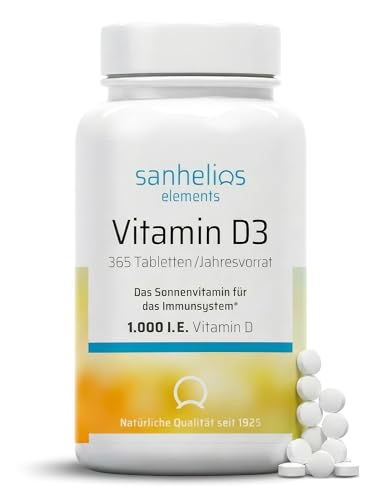 Ad−41%
 Ad−32%
WeightWorld Vitamin D3 Gummies 4000 IE - 120 Gummibärchen ohne Zucker
Important notice
Food supplements are no substitute for a balanced, varied diet or a healthy lifestyle. If you have a pre-existing condition, are pregnant or breastfeeding, or take medication regularly, ask a doctor or pharmacist for advice before taking them. Do not exceed the recommended daily intake stated on the pack. The information on this page is for general guidance only and is no substitute for individual advice.
FAQ
Should everyone take vitamin D in winter?
Not automatically. Supplementing can make sense if your own production is permanently low or a deficiency has been diagnosed. The DGE gives 20 µg per day as the estimated value when the body produces none of its own.
Does combining it with K2 offer an advantage?
This has not been conclusively established by science. Both vitamins contribute to the maintenance of normal bones, but an additional benefit of the combination for healthy people has not been proven.
Is 10,000 IU a day too much?
This amount is well above the BfR recommendation and above the EFSA upper limit of 4,000 IU per day. It should only be taken under medical supervision.
How can I tell if I have a vitamin D deficiency?
Only reliably through a blood test for 25-hydroxyvitamin D. Non-specific symptoms such as tiredness have many possible causes.
Can I combine vitamin D with blood thinners?
Pure vitamin D is usually unproblematic here, but vitamin K2 can affect how vitamin K antagonists work. Discuss taking it with your doctor.